When to Fertilize Houseplants: Check Growth, Mix and the Label
Fertilize when a houseplant is actively growing, its conditions are suitable and its existing nutrient supply has been considered. A yellow leaf or a calendar reminder is not enough reason to feed. This guide concerns established foliage plants in ordinary potting mix; seedlings, orchids, hydroponics and other specialist systems need their own instructions.
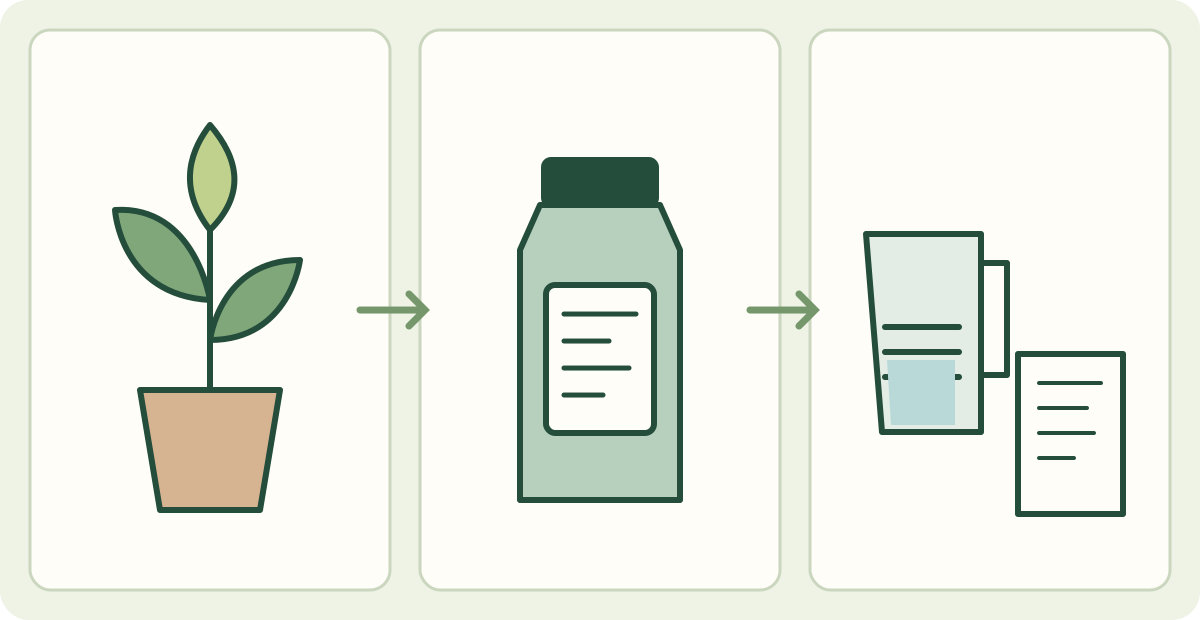
Read the diagram as a sequence: assess growth, check the product, then measure and record. It does not prescribe a dose.
Decide whether feeding is appropriate
Iowa State Extension ties feeding to active growth and emphasizes that concentrations and intervals vary by product. “Every week” and “always half strength” are not universal rules.
| Current situation | Useful next step |
|---|---|
| Healthy new growth under suitable light | Review the plant’s needs, last application and product label |
| Growth has paused as light decreases | Reassess conditions and defer routine feeding rather than forcing growth |
| Recently moved into a fertilized mix | Check the mix’s nutrient information before adding more |
| Wilting, persistent wetness or sudden leaf decline | Investigate water, roots and environment before feeding |
Season names are shorthand for conditions, not a global timetable. A plant under suitable supplemental lighting may keep growing during a local winter. A dim, warm room does not automatically provide enough light for useful growth. Review the light guide when this is uncertain.
Check what is already in the pot
Look for fertilizer included in fresh mix and any slow-release granules previously added. Note the application date and the product’s stated release period. Do not stack liquid feed, spikes and slow-release products because each seems mild on its own.
Choose a fertilizer appropriate to the plant and container culture. A houseplant-specific label may already prescribe the intended dilution; copying a blanket half-strength rule can misread it. New Hampshire Extension explains how soluble and slow-release formulations differ and why excessive soluble salts can harm roots and leaf margins.
Measure an application you can reconstruct
Read the actual label before mixing. Check the units, water volume, application method and repeat interval; a capful is useful only if the label defines it. Follow any instructions about moistening the mix first. Do not double the next dose after a missed application, or keep feeding to “use up” the solution.
Use this record format: date — plant — product — amount — dilution water — actual application — next review. Example only: “New leaves expanding; checked existing slow-release feed; no extra fertilizer.” An inspection that leads to no application is still a useful entry in a care journal, including when you use Bloomia reminders.
If tips brown or leaves yellow
Pause before adding more. White crust can contain fertilizer salts or minerals from water; it does not identify the source by itself. Compare feeding history with watering, drainage and the plant’s symptoms. The spider plant brown-tip guide illustrates this approach.
Do not repeatedly flush a waterlogged pot as a reflex. Check drainage and root condition first using the wet-soil guide. After repotting, account for nutrients in the new mix and watch subsequent growth rather than treating fertilizer as an immediate recovery treatment.