When to Repot Houseplants: Check the Roots Before Sizing Up
Repot when the roots or potting mix need a change, rather than simply because another year has passed. A bigger pot and fresh mix solve different problems; some plants need one, both or neither. This guide is for established foliage houseplants in ordinary pots with drainage, not orchid bark culture, hydroponics or cactus-specific repotting.
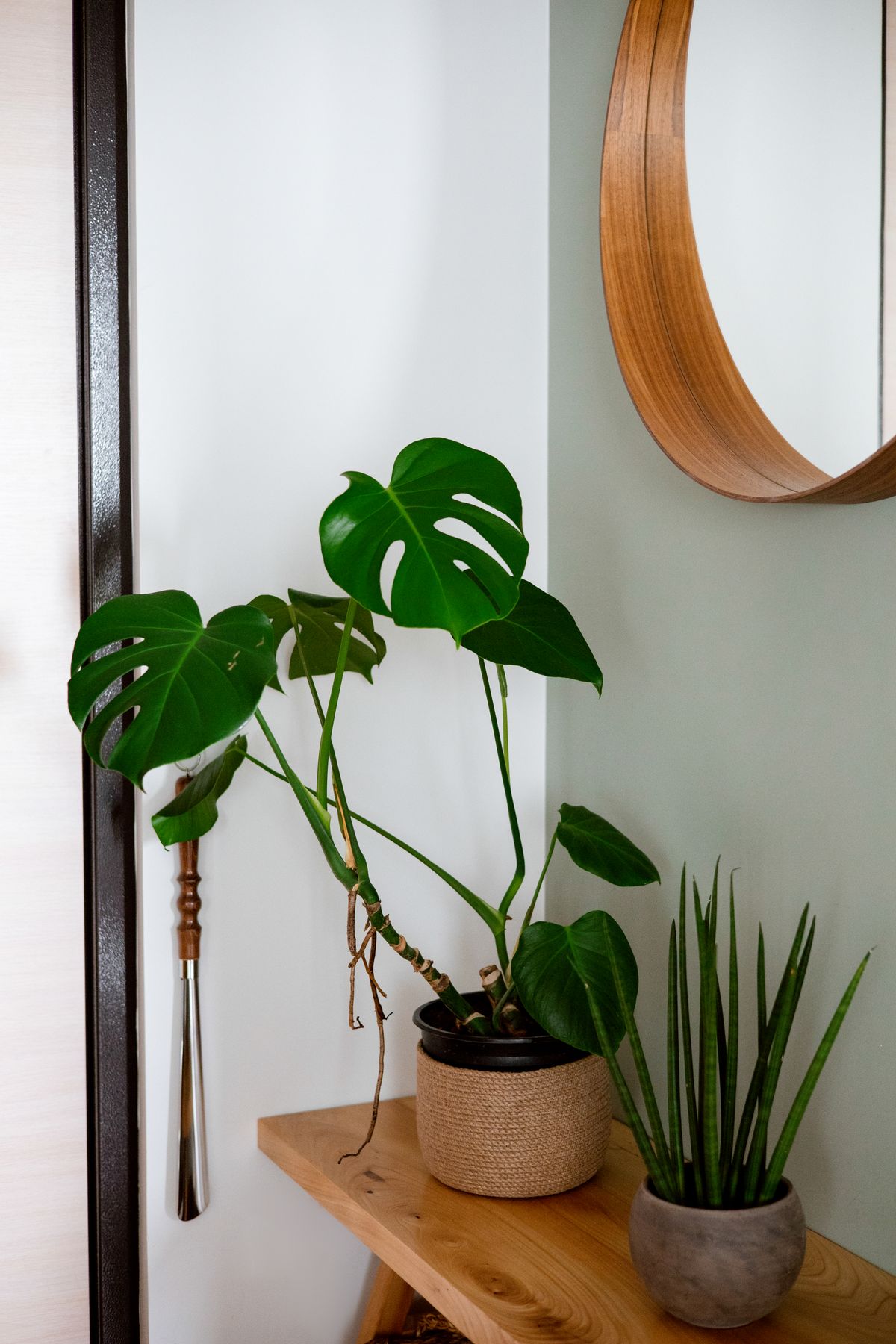
Check more than the drainage holes
Roots at a drainage hole are a reason to look more closely, not a complete diagnosis. First note how quickly the mix dries, whether water drains and whether the plant is growing under suitable conditions.
If the pot is manageable, support the rootball and gently ease it out once. Loosen a flexible nursery pot rather than pulling the stem. Stop if removal would require force; do not tear roots just to complete an inspection.
| What you find | What to consider |
|---|---|
| A dense network of circling roots with little mix visible | A modest increase in pot size may provide needed growing space |
| Few roots, but old mix is compacted or drains poorly | Replacing unsuitable mix may matter more than increasing the container size |
| One escaping root, with ample mix and otherwise healthy growth | Do not upsize on this clue alone |
| Slow growth without crowded roots | Check light, temperature and the species’ growth cycle before changing pots |
Iowa State Extension identifies rapid drying, slowing growth, instability and deteriorating mix as reasons to assess repotting. These clues need context: none on its own proves that roots have run out of space.
Choose space for roots, not a much larger wet zone
When the rootball genuinely fills its pot, choose a slightly larger container with working drainage. Do not jump several sizes to avoid future repotting. The RHS explanation of overpotting describes how excessive new mix can remain wet around a small rootball and reduce aeration.
If roots still have space, refreshing mix in a suitable same-size pot may be an option. Do not cut healthy roots just to fit a preferred decorative pot. Use the species’ requirements to choose the mix; “indoor plant soil” is not a single recipe for every plant.
Pick a growing window and prepare first
For routine repotting, the start of active growth is usually a useful window. A month name alone is not a rule across climates or hemispheres. Drainage failure or suspected rot needs assessment rather than waiting automatically for spring.
Before starting, have the draining pot, suitable mix and a place for excess water ready. Keep the plant at its appropriate planting depth instead of burying its stem to fill a tall container. Maryland Extension’s repotting guide explains placing and settling the rootball; gravel does not replace a drainage hole.
Record why you made the change
Note the old and new pot sizes, mix, root observations and actual watering in a plant care journal. Example only: “Roots densely circling; moved one pot size up; drainage checked.” A record lets you review the reason instead of repotting again whenever a leaf changes.
If leaves droop afterward, use the post-repotting checklist. If the main problem is persistent wetness, start with soil that stays wet before buying an even bigger pot.