How to Clean Houseplant Leaves: Match the Method to the Surface
For most smooth, sturdy houseplant leaves, a soft cloth dampened with plain, room-temperature water is a useful first choice. Support the leaf and wipe gently. Hairy, delicate or powder-coated leaves need a different approach; the aim is to remove loose dirt without damaging the surface.
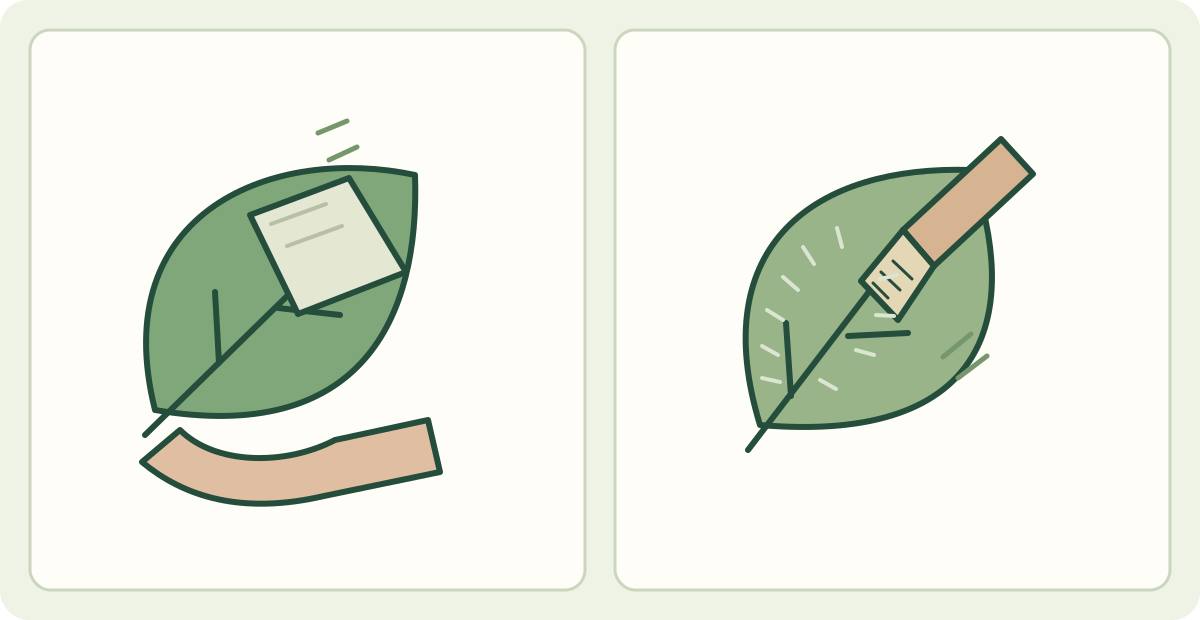
Left: gentle wiping of a smooth leaf. Right: light brushing of a hairy leaf. The diagram shows methods, not a before-and-after treatment result.
Identify what you are trying to remove
Loose gray dust, dried water marks, sticky residue and damaged tissue are different things. Photograph suspicious patches before cleaning. A brown patch within the leaf will not wash away, and rubbing harder can add injury.
If the surface is sticky, inspect leaf undersides, stems and joints for pests. Iowa State Extension describes honeydew associated with sap-feeding insects. Stickiness is a reason to inspect, not enough evidence to name the pest or choose a spray.
Choose a method by leaf texture
| Leaf or plant type | Suitable starting method |
|---|---|
| Smooth, firm, broad leaves | Soft damp cloth; support from below and use light pressure |
| Many small leaves on a manageable plant | Gentle room-temperature or lukewarm rinse, if the species tolerates it |
| Hairy or fuzzy leaves | Soft brush used lightly; check species-specific guidance before wetting |
| Delicate growth or a natural powdery coating | Avoid rubbing; confirm the species’ needs before cleaning |
Iowa State’s cleaning guidance supports cloth cleaning, gentle rinsing and soft brushes. Plain water usually removes dust without introducing household detergents that may damage the leaf surface. Illinois Extension also cautions against washing hairy foliage.
Wipe or rinse without soaking the pot
- Inspect the plant separately if pests are suspected; avoid carrying it through other foliage.
- Dampen a clean, soft cloth and support each sturdy leaf with your other hand. Wipe both accessible surfaces without bending the stalk.
- Rinse the cloth as it becomes dirty and use a clean one between affected plants.
- For a rinse, test temperature and pressure first. Protect already-wet mix from an unnecessary soaking and let any excess water drain away.
Let foliage dry in suitable indirect light and normal ventilation. Do not put a recently cleaned plant into harsh sun to speed drying. If its pot is already staying wet, review the drainage checks.
Skip polishing and keep useful observations
Oil, mayonnaise or improvised detergent mixtures are unnecessary for routine dust removal. A glossy finish does not establish plant health, and cleaning is not a substitute for identifying an infestation. Stop if the surface starts bruising or the cloth lifts a natural coating.
Clean when dust accumulates, rather than forcing every plant into a weekly schedule. Note what you removed and whether residue returns. Example only: “Loose dust wiped off; brown patch unchanged; no visible insects.” Comparable photos in a care journal preserve that distinction.
If the plant still stretches toward the window, check its actual light exposure. Clean leaves cannot compensate for an unsuitable position.