Grow Lights for Houseplants: Set Up a Small Trial
A grow light is useful when available daylight cannot meet a plant’s needs. Start with one shelf or plant and a repeatable setup. A lamp that looks bright to human eyes does not necessarily deliver enough usable light across every leaf.
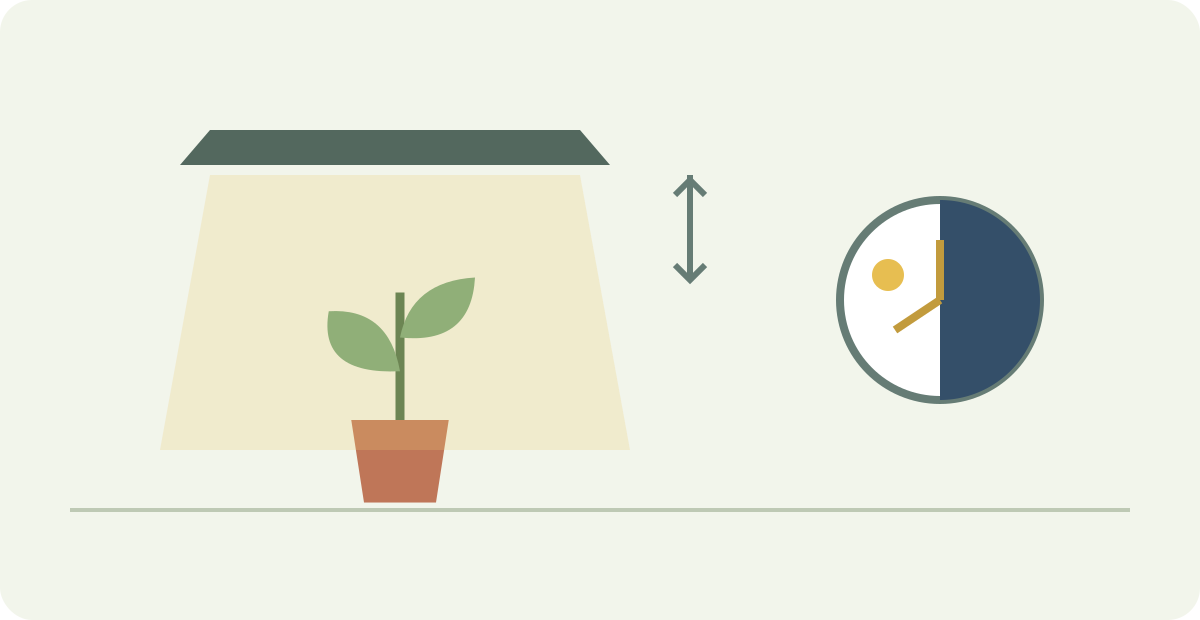
Plan coverage, not just brightness
Measure the area occupied by foliage and check the fixture’s coverage information at its stated mounting distance. Electrical watts describe consumption, not the light reaching each leaf. Compare manufacturer data using the same distance and area. Tall plants and shelf edges may receive different amounts.
Use distance and time together
Follow the fixture’s installation and plant guidance as a starting point, then observe. Minnesota Extension explains that intensity and duration both matter. Do not compensate for a weak setup by running it continuously: provide a daily dark period. A timer makes the cycle repeatable. Keep leaves away from hot parts and water away from electrical equipment. (Minnesota Extension)
Run a controlled comparison
Record lamp model, distance to the highest leaves, daily hours, daylight exposure and a photo. Change one variable at a time and compare new leaves and stem spacing, rather than expecting old stretched stems to shorten. Bleaching or damage after a change means reviewing exposure and heat, not automatically adding fertilizer. Check soil drying too: a new lighting arrangement can change watering needs.