Fungus Gnats in Houseplants: Find the Source and Interrupt Breeding
Small dark flies near a pot may be fungus gnats, but first confirm where they are breeding. Yellow sticky cards catch adults; they do not remove larvae already living in the mix. A useful response combines finding the source, correcting excess moisture and monitoring what emerges afterward.
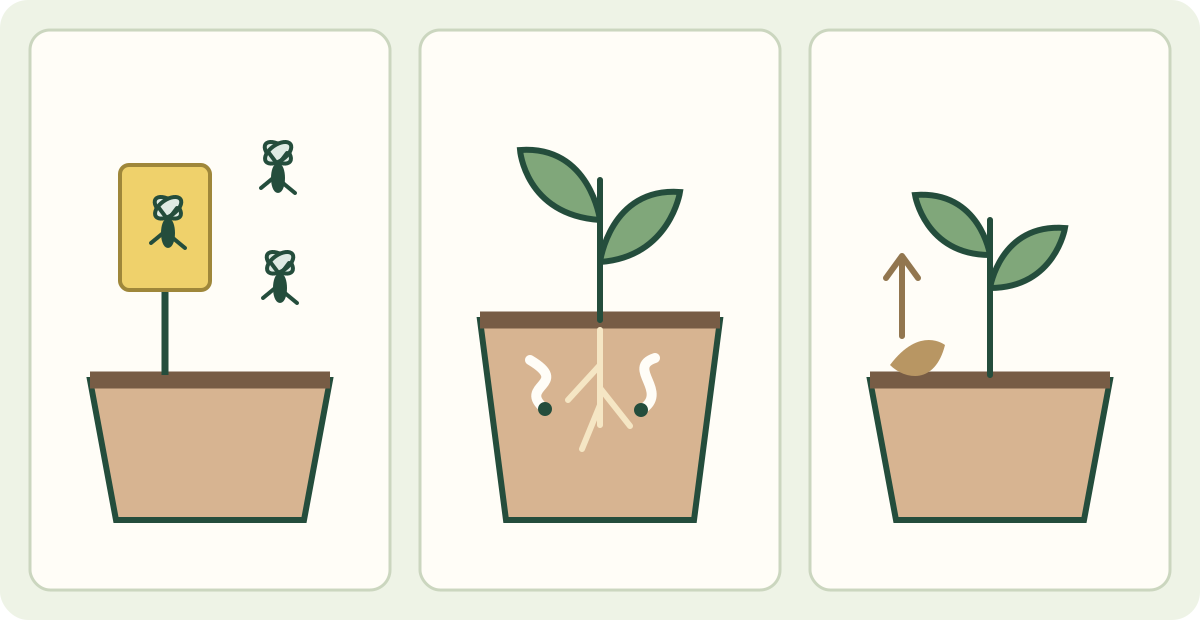
The three panels show adult monitoring, the larval habitat and cleanup. Insects are enlarged for explanation; this is not an identification photograph.
Check the source before treating every pot
Watch which pots release flies when disturbed or watered, and compare catches on cards placed near the mix. Check nearby damp organic debris and drains too. Flies clustering around fruit or a drain are not automatically a plant infestation. Maryland Extension recommends identifying the breeding source before choosing controls.
Fungus gnat adults are slender, dark flies; larvae are pale with dark heads and live in moist growing media. Adult nuisance does not prove root damage. Heavy larval populations can affect roots, especially in young plants, but wilting has other common causes. UC IPM explains identification and the difference between adult and larval damage.
Change the breeding conditions
- Empty standing water from saucers or cover pots and check drainage.
- Remove fallen leaves and other decaying material from the surface.
- Let the surface become drier between waterings where the plant’s needs allow. Do not desiccate a moisture-loving plant or assume the whole rootball must become bone dry.
- Close bags of unused potting mix and inspect neighboring plants. Avoid moving an infested pot among unaffected plants.
If the mix remains persistently wet, follow the wet-soil checklist. Repeatedly replacing all soil or washing roots is not the first response to a few flies; investigate drainage and watering first.
Know what each tool can do
| Tool or observation | Useful role and limit |
|---|---|
| Yellow sticky card near the mix | Tracks and catches adults; does not treat larvae in the pot |
| Moisture and debris checks | Address breeding conditions; must respect the plant’s requirements |
| A locally labeled larval treatment | Targets the appropriate life stage; application depends on the actual product |
For a persistent confirmed infestation, look for a product whose local label specifically permits the intended indoor-plant use against fungus gnat larvae. Maryland describes Bti, Bacillus thuringiensis subsp. israelensis, as one option. It is not interchangeable with every product labeled “Bt.” Follow the product’s rates and repeat instructions rather than a homemade dilution or a recipe for another use.
Track the trend under comparable conditions
Keep cards in similar positions and compare catches over equal observation periods, replacing full cards as needed. Existing immature stages can continue producing adults, so one fly the next day does not establish failure. Record the plant, moisture, catches and actual action in a care journal.
Example only: “Pot A; deeper mix damp; removed dead leaves; no watering; card checked.” Use the watering guide for the next decision. If seedlings decline or the pest remains uncertain, take clear photos and seek horticultural identification before adding treatments.